Finance
Wall Street Slides as Oil Tops $116, With Traders Bracing for Next Week’s Fed Meeting
The Dow shed 652 points and the S&P 500 fell 0.5% as Brent crude jumped above $116 a barrel on Middle East supply fears. With the Fed’s October meeting days away and a December hike nearly priced in, investors are caught between solid earnings and sticky inflation.
By PagalHo News Desk 5m ago · 4 min read
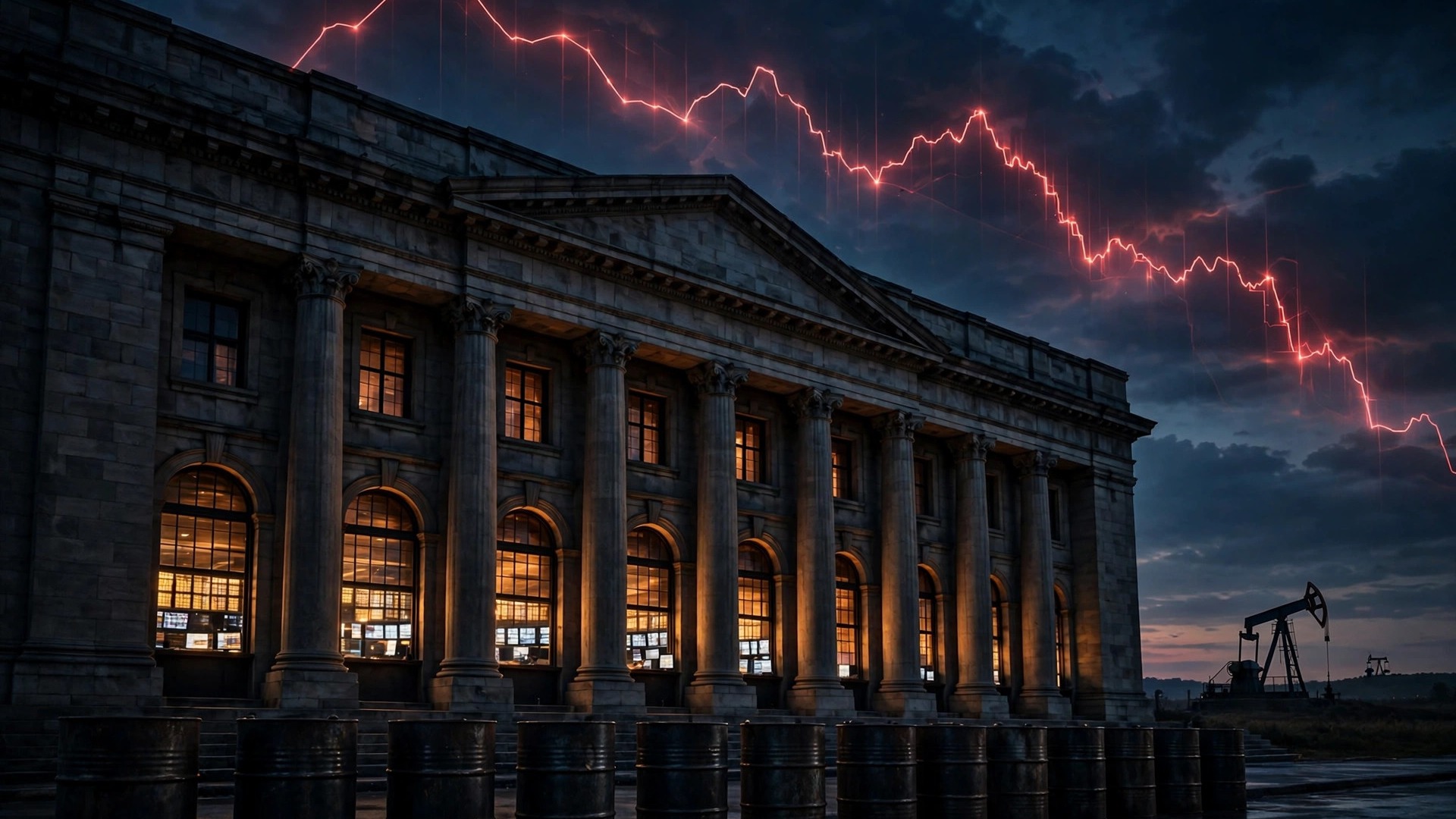
Wall Street ended a tense week on the back foot as surging oil prices and fears of a wider Middle East conflict spooked investors just days before the Federal Reserve’s October policy meeting. On Friday, October 23, the Dow Jones Industrial Average fell 652.82 points, or 1.23%, to 52,215.16 — its weakest showing among the headline indexes. The S&P 500 slipped 39.75 points, or 0.52%, to 7,623.68, while the Nasdaq Composite eased 0.21% to 25,955.34. Wall Street’s fear gauge, the CBOE Volatility Index, jumped 3.84% to 19.76.
The trigger was crude. Brent oil surged 3.1% to $116.72 a barrel, its highest settlement since April, while West Texas Intermediate jumped 3.8% to $103.27. The spike followed reports that the United States and Israel are drawing up plans for another strike on Iran, alongside Houthi attacks on Saudi Arabia — both raising fears of a disruption to Middle East energy supplies. Tehran countered that it was ready to retaliate. The S&P 500’s energy sector responded the only way it could: a 2.51% gain to a record high, with oilfield services firm SLB up 7.08% after beating third-quarter profit estimates.
The selloff elsewhere was broader than oil alone. Technology shares that had tumbled on Thursday extended their losses as investors kept questioning the cost and financing of the AI boom — Meta fell again after posting its first cash outflow in more than a decade. Telecom stocks were hammered after a report said SpaceX is in talks about launching a nationwide wireless carrier: AT&T dropped 7.96%, T-Mobile 7.71% and Verizon 1.53%, while tower operators Crown Castle and American Tower surged 9.13% and 4.08%. There was at least one bright spot: semiconductors rebounded, with the Philadelphia Semiconductor Index up 0.44% as Micron gained 2.46% and AMD 1.74%.
Why this matters: the oil shock lands at the worst possible moment for anyone hoping for lower interest rates. Crude above $116 feeds straight into the inflation data the Fed watches, and futures markets already give the December rate hike rising odds. In a Reuters poll of 100 economists published October 20, 94 expect the Fed to hold at 3.75%–4.00% at the October 27–28 meeting, but all 100 expect a hike in December — up from fewer than half a month earlier. As Mizuho’s Alex Pelle put it, with a strong economy and inflation above the Fed’s 2% target for nearly six years, “there’s really no reason for you to worry so much about getting interest rates higher”. The 10-year Treasury yield, hovering near 4.98%, is doing part of the Fed’s work for it — and squeezing the heavy AI data-center borrowing that drove this year’s market.
Yet the market story has an important contradiction worth noticing. Portfolio manager Jed Ellerbroek of Argent Capital told CNBC that for two weeks “investors have been sprinting from tech stocks and data center beneficiary stocks to safe stuff, and eventually, you run out of people willing to do that sprint — and that’s what today looks like and feels like.” In other words, much of this selloff is emotional rotation, not a response to bad results: technology earnings this season have actually been solid, and LSEG data points to third-quarter S&P 500 earnings rising more than 32%. When prices fall while profits rise, the gap is usually where the next opportunity — or the next scare — lives.
What to watch next week: the Fed’s October 27–28 decision and, more importantly, any signal about December; earnings from Alphabet, Microsoft and Amazon, whose capital-expenditure outlooks will settle the AI-spending debate; and whether oil holds above $115. The Michigan consumer-sentiment survey already fell near a record low in October, with rising prices blamed on the Middle East conflict — a reminder that geopolitics now reaches household budgets fast. Our forex section explains how macro shocks move currencies and commodities, and the free course covers the risk-management basics that matter most in weeks like this. (Not financial advice.)