Finance
Nvidia’s $130 Billion Forecast Couldn’t Stop Wall Street’s AI Selloff
Nvidia beat estimates and guided to $130 billion in quarterly revenue, yet the Dow still fell 860 points — investors are no longer buying the AI story on faith alone.
By PagalHo News Desk 9h ago · 4 min read
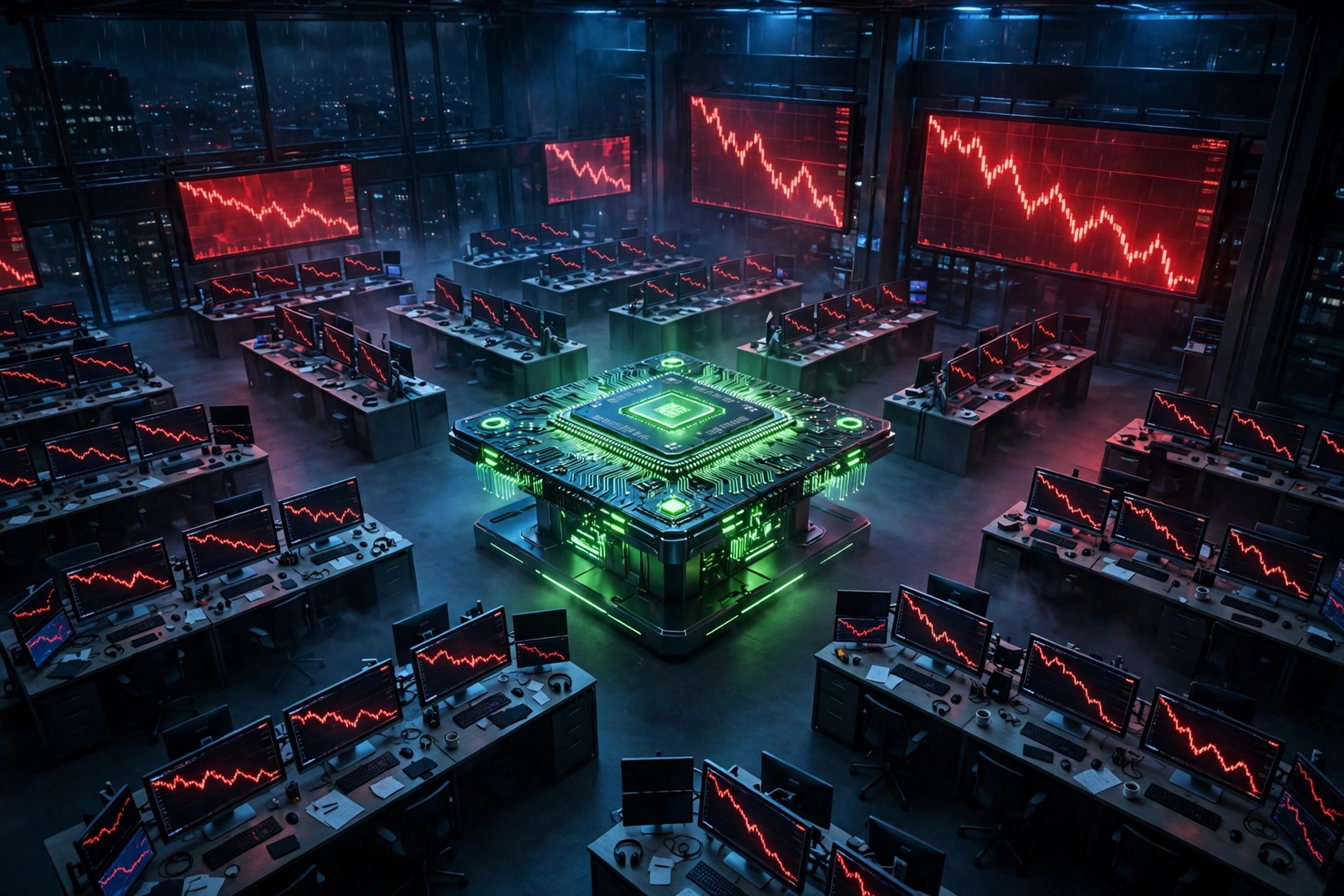
Wall Street suffered one of its worst days of the autumn on Tuesday, November 17, as a selloff in artificial intelligence stocks deepened even before the most important earnings report of the season landed. The Dow Jones Industrial Average fell 859.71 points, or 1.67%, to close at 50,748.46, the S&P 500 lost 1.02% to 7,341.23, and the Nasdaq Composite slipped 0.74% to 24,329.34. European markets fell just as hard, with the Euro Stoxx 50 down 2% and Germany’s DAX shedding the same.
The irony is that the company at the centre of the storm delivered exactly what the market asked for. Nvidia reported quarterly revenue of $115.8 billion, comfortably ahead of the $109 billion analysts expected, with revenue up about 103% year on year and its data-centre business growing roughly 110%. Its forecast for the current quarter was even stronger: $130 billion, plus or minus 3%, against a Wall Street average estimate of $125.25 billion. The shares rose as much as 4% in after-hours trading once the numbers were out.
So why did the market fall first and ask questions later? Because the worry is no longer about Nvidia’s sales — it is about everything around them. The chipmaker’s longtime chief executive, Jensen Huang, resigned last week, and the Wall Street Journal reported on Tuesday that the US Securities and Exchange Commission is probing the company after his departure. Huang has agreed to appear for transcribed interviews with several US House committees on December 1, and Nvidia’s general counsel will follow on December 2. Short-seller Muddy Waters disclosed a short position in the stock on Tuesday, and Intel fell 3% after Nvidia cut its stake in the company by a quarter. Investors who once treated AI spending as a one-way bet are now pricing in leadership risk, regulatory scrutiny and the uncomfortable question of whether the trillions being poured into AI infrastructure will ever earn their keep.
The macro backdrop is doing the rest of the damage. The Federal Reserve is widely expected to raise rates again at its December 8–9 meeting — markets now put the odds near 92% — after holding at 3.75% to 4.00% in October, and the 10-year Treasury yield climbed toward 5.15% on Tuesday. Gold slipped to a one-year low near $3,869 an ounce as the dollar held close to its strongest level since April 2025. The minutes of the Fed’s October meeting, due on November 19, will be read closely for how firmly policymakers are leaning toward another increase. Meanwhile, Anthropic is pressing ahead with an initial public offering that could raise more than $60 billion on Thursday, a test of whether investors still have appetite for AI at any price. Wells Fargo, for its part, set a year-end 2027 target of 8,200 for the S&P 500, arguing the next phase of the AI trade will favour the big cloud operators over the companies selling them the picks and shovels.
What to watch next: whether Nvidia’s after-hours bounce holds into Wednesday’s session, the Fed minutes on November 19, and Anthropic’s IPO pricing. The contrast with India is worth noting too — the Nifty closed Tuesday at a nine-month high of 25,387.40, with Bank Nifty at a record and foreign investors buying through the global wobble. If Nvidia’s numbers cannot steady the US market, the AI trade may be entering a new phase where earnings alone are not enough. For readers tracking how rates and sentiment move markets, our forex section explains the macro forces behind these swings, and the forex tools page has calculators for sizing risk before any trade. (Not financial advice.)