Finance
Fed Minutes Point to More Rate Hikes as Dow Sheds 561 Points
Minutes from the Fed’s October meeting showed almost every official expects further rate increases — and markets reacted fast, with the Dow falling 561 points and the dollar hitting a 19-month high.
By PagalHo News Desk 4d ago · 4 min read
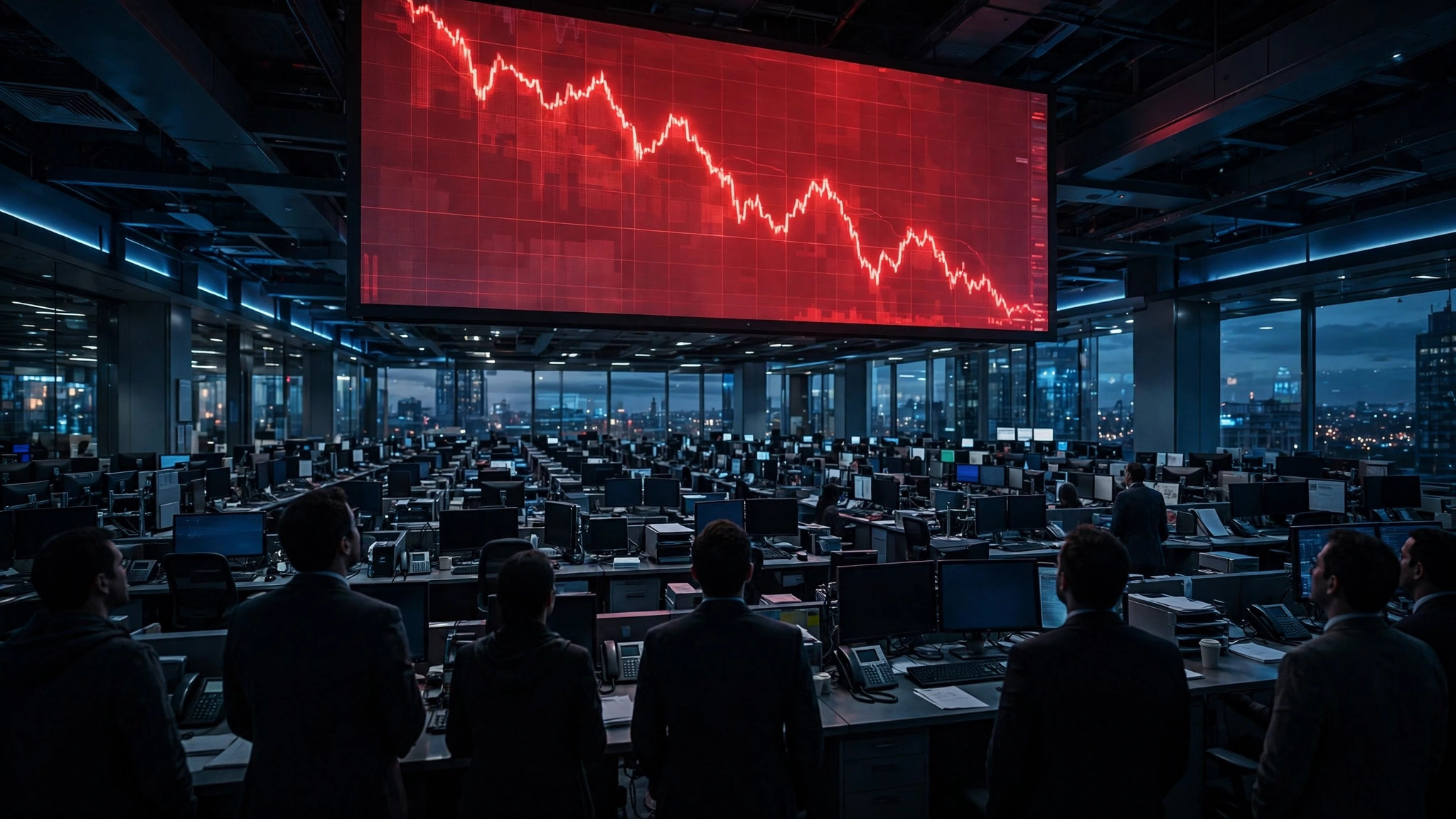
Wall Street closed split on Wednesday, and the divide told the story of the day. The Dow Jones Industrial Average fell 561.25 points, or 1.11%, to 50,198.17, while the S&P 500 slipped 0.23% to 7,323.63 — its fifth consecutive losing session, the longest slide since June. The Nasdaq Composite, by contrast, added 0.42% to 24,429.88. The trigger was the release, at 2 p.m. Eastern, of the minutes from the Federal Reserve’s October 27–28 meeting, which showed a central bank far closer to raising rates again than the hold had suggested.
The minutes said that “almost all” officials judged further increases in the federal funds rate “would likely be appropriate” to bring inflation back to the 2% target. The rate was held at 3.75% to 4.00% by a 10–2 vote, with Governor Lisa Cook and Cleveland Fed President Beth Hammack dissenting in favour of an immediate quarter-point rise. A couple went further, saying a rise of more than 25 basis points could warrant consideration in December if inflation data disappointed. Governor Christopher Waller underlined the point the same day, telling CNBC the Fed may need a half-point December hike, or a clear signal of a faster pace in 2027. The data is not helping the patient camp: consumer prices rose 0.4% in October and 0.3% at the core, both a tenth above forecasts, while wholesale prices were up 6.5% over the year.
The newest element is one markets had treated as a growth story, not a price risk. “Many participants” in the meeting called the artificial-intelligence buildout “a material source of inflation risk”, pointing to demand for chips, power and construction running ahead of supply, and a risk that higher costs pass through more broadly into consumer and business prices. Fed staff also flagged the financing behind the boom: AI-related debt has grown quickly through “complex and opaque financing structures” that “could amplify losses if returns on AI investment were to disappoint”. The irony was on display the same day: Nvidia beat third-quarter expectations and forecast fourth-quarter revenue of $130 billion, above the $125.25 billion analysts expected, yet its shares fell 2.9% to $150.96 after downgrades tied to the leadership transition and export controls. AMD rose more than 5% and Broadcom over 3%, helping the Nasdaq stay green.
The rate-hike talk rippled well beyond equities. The US dollar touched a fresh 19-month high, gold fell more than 2% to $3,765 an ounce — its lowest since September 2025 — and the 10-year Treasury yield eased to around 5.07%. Healthcare led the Dow’s fall after regulators proposed the CRUSH rule to expand insurer audits and claw back overpayments: UnitedHealth plunged 10.31% and Merck fell 3.90%, while Chevron lost nearly 4%. Housing added to the gloom, with pending home sales falling 4.7% in October to a record low since the series began in 2001. Anthropic, meanwhile, priced its IPO at $83 a share, above its $70–$78 range, valuing the AI firm at about $1.4 trillion ahead of its Nasdaq debut on Thursday.
Why this matters: the market no longer debates whether the Fed will hike in December — traders have fully priced in a quarter-point move — but how far and how fast it goes after that, and whether the AI boom that has carried stocks can keep doing so while the Fed treats it as an inflation risk. What to watch next: the November consumer price report, due before the Fed’s December 8–9 meeting, and Anthropic’s first day of trading, a live test of AI appetite under the Fed’s new scepticism. Track the run-up with our forex tools. (Not financial advice.)