Forex
Dollar Sits Near One-Month Low as Oil Slump and RBA Hike Reshape the Currency Map
A 7% oil plunge dragged the dollar to a one-month low, Australia hiked rates to a 16-year high yet saw its currency dip, and China moved to slow the yuan — all before Tuesday’s US midterms.
By PagalHo News Desk 2m ago · 4 min read
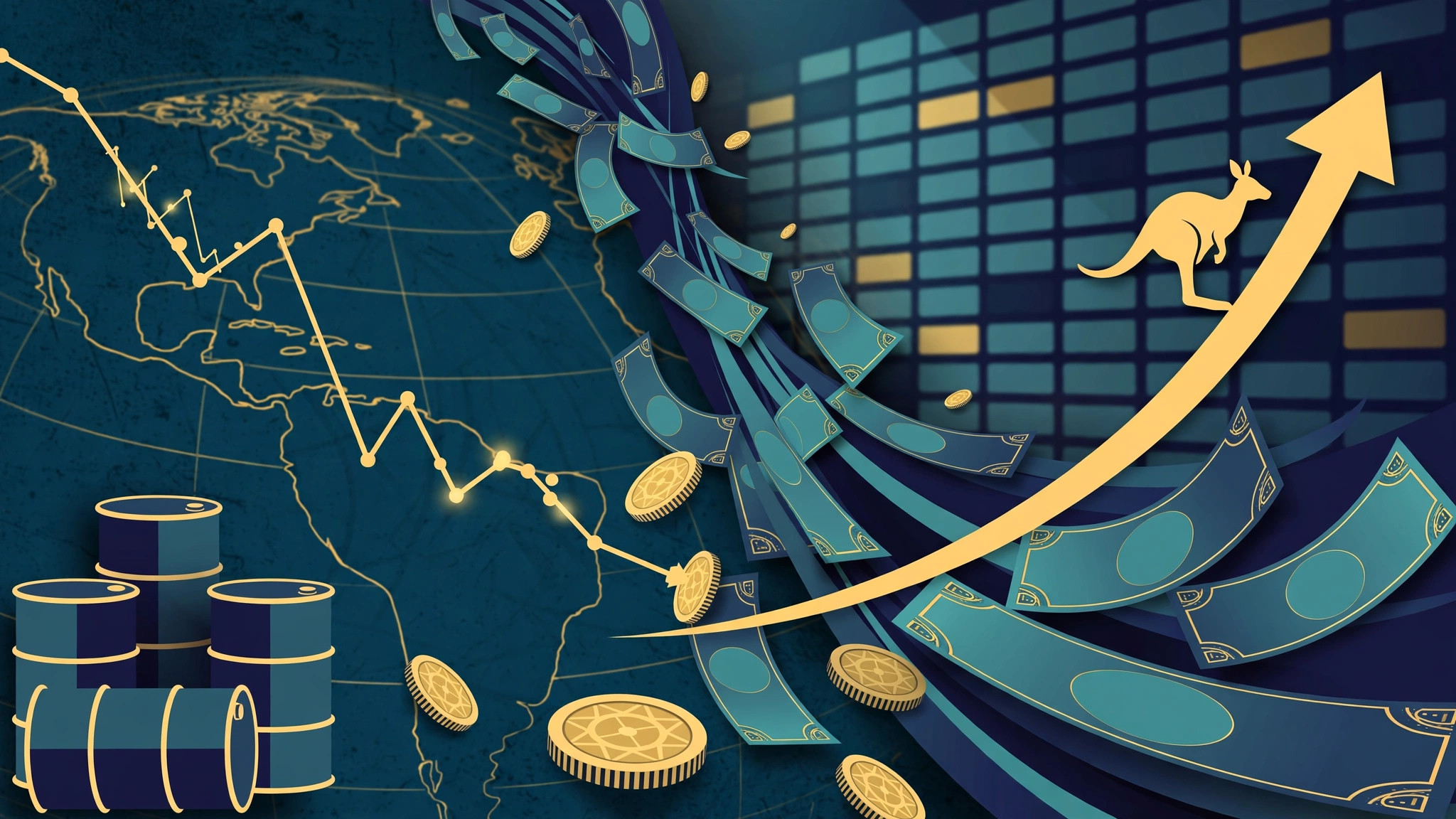
The US dollar opened Tuesday, November 3, pinned near a one-month low after a dramatic Monday session rewrote the week’s currency story. The dollar index traded around 101.81 in early Asian hours, a shade firmer after Monday’s drop to its lowest in about a month, near 101.42. The trigger was not a US data release or a central bank speech, but oil: Brent crude plunged more than 7% on Monday, its sharpest single-day fall in months, after Tehran said its contacts with Washington aimed at ending their eight-month war were continuing. Brent clawed back about 0.5% to $105.25 on Tuesday as US defensive strikes on Iran’s Qeshm Island blunted some of the diplomatic optimism.
Cheaper energy changes the currency maths in two ways. First, it eases the inflation fears that had been keeping US Treasury yields elevated, with the 10-year yield holding near 4.91% after falling to its lowest in almost two months. Second, it trims the safe-haven premium investors pay for holding dollars. Strikingly, the dollar fell even though Monday’s US manufacturing data beat expectations, with the ISM index rising to 55.5 in October from 54.5 in September. When strong data cannot lift a currency, it tells traders the bigger forces — energy, geopolitics and positioning — are running the show. Yet the dollar’s slide stayed orderly: an ongoing AI-driven stock selloff and caution ahead of Tuesday’s US midterm elections kept some safe-haven demand alive, a tension that strategists at OCBC summed up as cheaper energy reshaping currency dynamics while election risk keeps the dollar supported.
The day’s clearest lesson in market psychology came from Australia. The Reserve Bank of Australia raised its cash rate by 25 basis points to 4.85% on Tuesday, as expected — the highest since December 2008 and the fifth increase of 2026, taking total tightening this year to 125 basis points. Policymakers had warned of upside risks to core inflation, running at 3.7% against a 2% to 3% target. And yet the Australian dollar fell as much as 0.35% to $0.6974 after the decision, having traded near $0.7002 beforehand. It is the classic buy-the-rumour, sell-the-fact pattern: when a move is fully priced in, the currency trades on what comes next — in this case, Governor Michele Bullock’s guidance on whether this hiking cycle has reached its peak.
Elsewhere on the board, the euro held near $1.1182 and sterling near $1.3401, helped by British manufacturers starting the final quarter with their strongest output growth in more than two years. The yen was flat at 157.92 per dollar during a Japanese holiday, while New Zealand’s dollar sat at $0.5616. The sharpest single-currency move came from China: the offshore yuan headed for its biggest one-day decline since May, weakening 0.34% to 6.67 per dollar, after the People’s Bank of China said it would raise the foreign exchange reserve requirement ratio, tightening dollar liquidity and slowing the yuan’s recent climb. Technically, traders are watching whether the dollar index holds support at 101.50–101.65; a break below opens the way toward 100.70–100.85, while for the euro, resistance at 1.1225 and then 1.1250–1.1265 caps the upside.
What to watch next is a crowded calendar rather than a single event. Tuesday brings the US midterm elections, where a shift in control of Congress could change the fiscal outlook and move both yields and the dollar. The Bank of England is expected to raise its bank rate to 4.0% from 3.75% — its first hike since August 2023 — with Norway and Sweden also deciding policy this week, and Friday’s US jobs report closes the week. For readers learning how these forces connect, our forex section explains how yields, oil and central banks move exchange rates, and the forex tools page has pip and position-size calculators for planning risk before trading a volatile week like this one. (Not financial advice.)