Is Forex Trading Halal or Haram?
Islamic scholars differ on forex trading. The fatwa material reviewed here rules it permissible with strict conditions: trades must be spot and settled promptly — never deferred — with no riba (interest). Accounts charging overnight interest should be avoided in favour of swap-free (Islamic) accounts.
Key fatwas reviewed
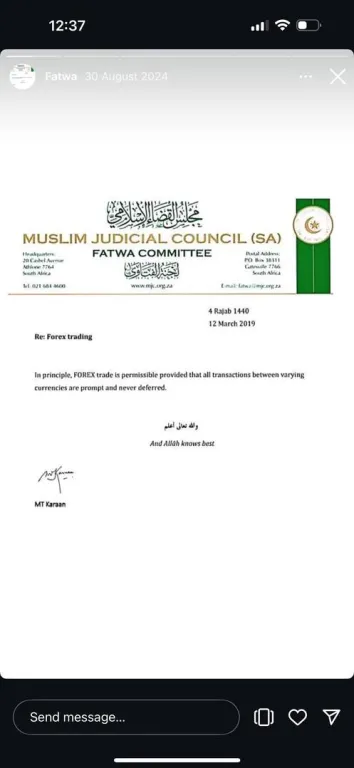
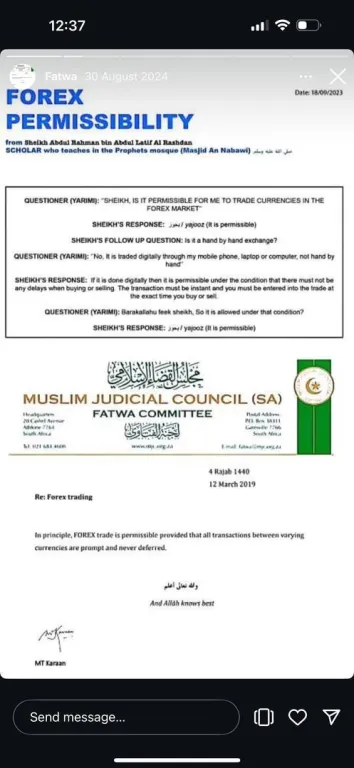
- Muslim Judicial Council (SA), Fatwa Committee (12 March 2019): forex trade is permissible provided all transactions between varying currencies are prompt and never deferred.
- Sheikh Abdul Rahman bin Abdul Latif Al Rashdan: digital trading is permissible if done with no delays — instant at the exact time of buying or selling.
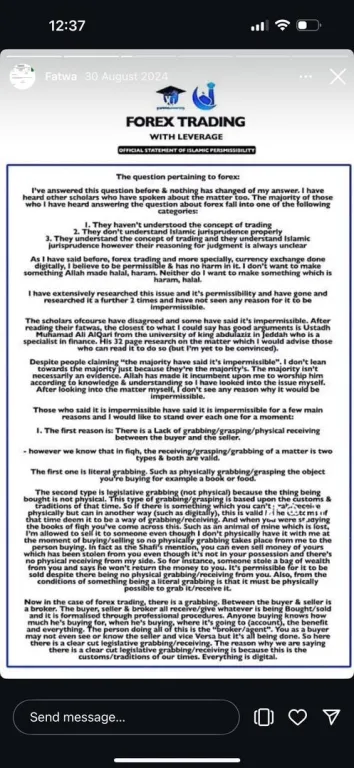
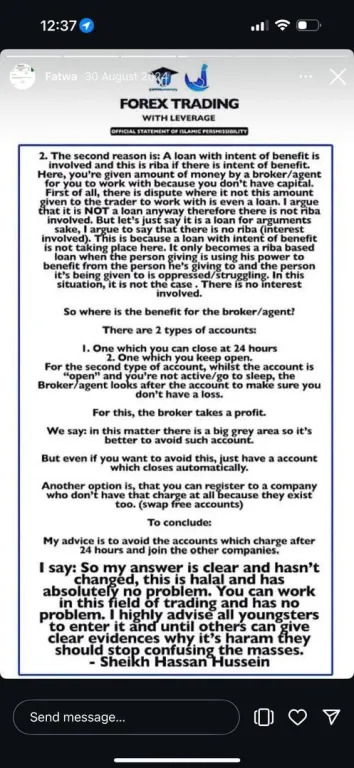
- Sheikh Hassan Hussein: digital possession (qabdh) counts as possession per the customs of our times; broker margin is not a loan with intent to benefit, so no riba in the margin arrangement — but overnight charges must be avoided via swap-free accounts.
Conditions for halal forex trading
- Spot only — immediate settlement, never deferred.
- Instant execution with no delays.
- Swap-free (Islamic) account — no overnight interest.
- Trade with knowledge and risk management, not gambling.
Educational content only — not a fatwa or religious ruling. Scholars differ; consult a qualified scholar you trust.
Reference images
The original fatwa documents this guide is based on:
Is Forex Legal in Pakistan?
The SBP & SECP guide to forex law in Pakistan.
Free Forex Course
10 free lessons with a certificate.
Frequently Asked Questions
Is forex trading halal?
Islamic scholars differ. The fatwas reviewed here rule forex trading permissible with strict conditions: trades must be spot and settled promptly (never deferred), with no riba (interest). Accounts charging overnight interest should be avoided in favour of swap-free (Islamic) accounts.
What makes forex trading haram?
In the impermissibility view, the concerns are deferred settlement, riba in the form of overnight swap charges, and excessive uncertainty (gharar). The permissibility fatwas address these by requiring instant spot settlement and swap-free accounts.
What is a swap-free (Islamic) forex account?
A swap-free account is a trading account with no overnight interest charges (swap fees), offered by many brokers specifically so Muslim traders can avoid riba on positions held overnight.
Does leverage make forex trading haram?
According to Sheikh Hassan Hussein’s statement, the broker’s margin facility is not a loan with intent to benefit, so no riba is involved in the margin arrangement itself — but any interest charged on leveraged positions (swap) must still be avoided.
Is digital forex trading accepted as “hand to hand” exchange?
Sheikh Abdul Rahman bin Abdul Latif Al Rashdan ruled digital trading permissible if there are no delays — the trade must be instant at the exact time of buying or selling. Sheikh Hassan Hussein adds that digital possession (qabdh) counts as possession per the customs of our times.