Lesson 7 of 10
Market Structure: BOS, CHoCH and Reading the Trend
HH/HL/LH/LL, break of structure (BOS), change of character (CHoCH) — reading who is in control.
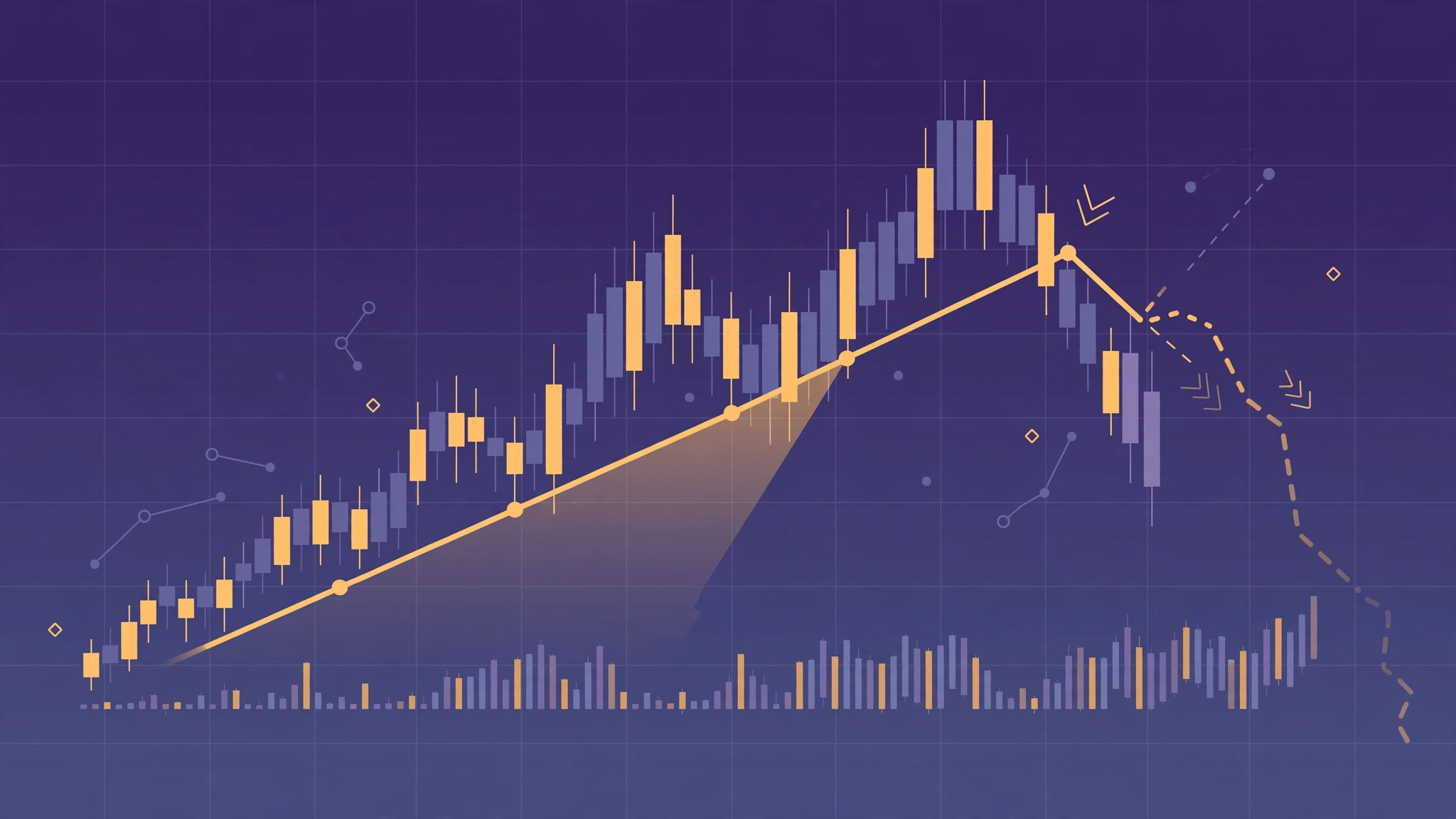
Market structure is the map of swing highs and lows that tells you who is in control. Uptrend = higher highs (HH) and higher lows (HL). Downtrend = lower highs (LH) and lower lows (LL). Sideways = overlapping highs and lows (a range). If you cannot label the structure, you should not be trading.
(Roman Urdu: Trend ko pehchanna sab se pehla kaam hai — unchi unchi highs/lows = uptrend, neechi neechi = downtrend.)
Break of Structure (BOS)
A BOS happens when price breaks a previous swing in the direction of the trend: in an uptrend, price takes out the last swing high. It confirms the trend is continuing. Traders use bullish BOS to look for buy setups on the pullback (often at the order block or FVG left behind).
Change of Character (CHoCH)
A CHoCH is the first break against the prevailing trend: in a downtrend, price suddenly takes out the last lower high. It is an early warning — not proof — that the trend may be shifting. Smart traders wait for a second confirmation (another BOS in the new direction) before flipping bias.
Reading structure step by step
- 1. Mark the obvious swing highs and lows on H4/Daily.
- 2. Label the sequence: HH/HL (up), LH/LL (down), or neither (range).
- 3. Note the last BOS — it defines the current trend leg.
- 4. Watch for CHoCH — the first crack in the trend.
- 5. Drop to H1/M15 only to time entries with the higher-timeframe structure.
Common structure mistakes
- Marking every tiny wiggle: use significant swings only; ignore minor pullbacks.
- Trading CHoCH as a reversal: one CHoCH is a warning, not a new trend. Wait for confirmation.
- Ignoring the higher timeframe: an H1 uptrend inside a Daily downtrend is just a pullback — trade it carefully or not at all.
- Forgetting ranges: markets spend ~70% of time ranging. Buying "breakouts" of a range usually means buying the top.
Top-down routine: a 10-minute example
Before every session, run this routine on EUR/USD:
- 1. Daily: structure is HH/HL — uptrend. Note the last Daily swing low; longs only while above it.
- 2. H4: a CHoCH just printed — momentum stalling. Bias softens to "longs only at discount."
- 3. H1: price pulled back into a bullish order block that overlaps a 61.8% Fibonacci level.
- 4. M15: wait for a bullish engulfing or M15 BOS up before entering — never preempt the trigger.
This routine takes ten minutes and prevents 90% of impulsive trades. (Roman Urdu: Rozana 10 minute structure check karo — phir hi entry socho.) If the timeframes disagree (Daily up, H1 down), the answer is usually to wait or trade smaller — disagreement is information, not an invitation.
Key takeaway: structure first, entries second. BOS = trend continues; CHoCH = trend may be ending. Align your trades with the higher-timeframe structure.
Risk warning: structure is read in hindsight and looks obvious after the fact. In live markets, swings are ambiguous — that is normal, and another reason to risk only 1–2% per trade.
Frequently asked questions
Frequently Asked Questions
What is the difference between BOS and CHoCH?
BOS breaks structure with the trend (continuation); CHoCH is the first break against the trend (potential reversal warning).
Which timeframe should I read structure on?
Define trend on H4/Daily, confirm on H1, and time entries on M15 or lower. Never trade M5 structure against the Daily trend as a beginner.
How do I trade a ranging market?
Buy near range support, sell near range resistance, take profit at the opposite boundary — and stand aside when price is mid-range. Breakout trades in ranges fail most of the time.